
توعية مرورية العراق
SAFE PCAuto & Vehicles
4.7374.00 Reviews
- Version
- 1.7.3
- Installs
- 500.00K
- Age Rating
- Everyone
Screenshots
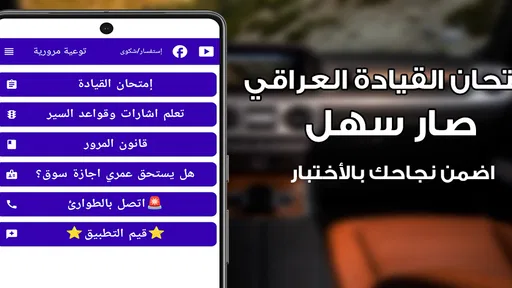
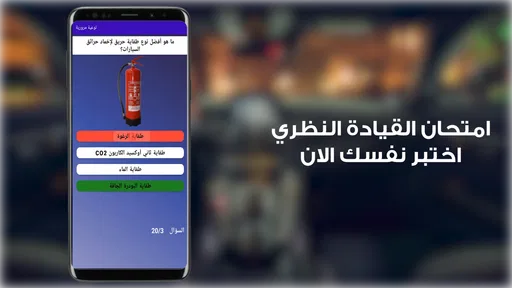
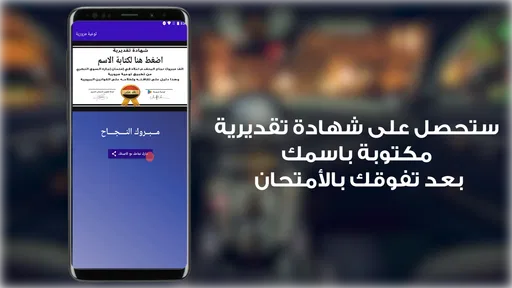
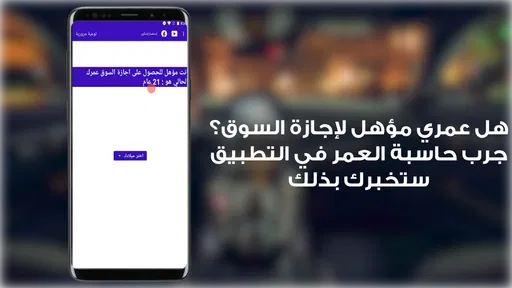
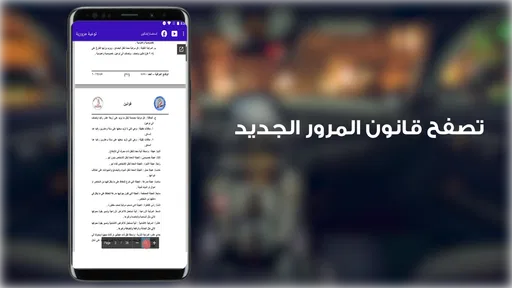
Our Review of توعية مرورية العراق
 Analysis by Appyee
Learning Iraqi traffic rules is much easier when the material is presented in the same practical context in which you will use it. That is where توعية مرورية العراق makes sense. I found it most useful as a focused driving-test and road-awareness app: instead of trying to be a complete driving school, it keeps attention on traffic signals and the mistakes that can lead to fines or unsafe decisions. My overall view is positive, but with an important qualification: it works best as a revision companion, not as a replacement for supervised driving practice or a full official study program.
The app is free, aimed at Everyone, and belongs to the Auto & Vehicles category. It was developed by SAFE PC, and its strong 4.7 average from around 7.5 thousand ratings suggests that many users find its central purpose worthwhile. It has passed half a million installs, which also makes it more established than a small, untested utility. I would recommend giving it a place in a learner's routine, especially for anyone who wants to become quicker at recognizing Iraqi road signs before sitting a test or driving independently.
What the app does well in everyday preparation
I find this app most useful when I treat it as a small part of a wider learning routine, rather than the whole routine. A short review can help me arrive at a lesson with one specific sign or road decision in mind, making the instructor’s explanation easier to connect to practice. The next question is where that focused approach gives the app its clearest advantage.
A narrow purpose that is easy to understand
The clearest strength is its focus. Many driving resources mix road signs with long explanations, vehicle mechanics, legal material, and general safety advice. That can be useful, but it also makes short study sessions feel heavier than they need to be. This app concentrates on traffic awareness and test-oriented learning, so I can open it with one question in mind: do I recognize the signal, and do I understand the behavior it requires?
That narrow scope is especially helpful when I have only a few minutes. Rather than waiting for the right mood to study a complete manual, I can use a brief session to refresh signs that I have recently forgotten. For a learner, repetition matters because recognizing a sign in isolation is different from noticing it quickly while thinking about lanes, pedestrians, turns, and other vehicles. A dedicated awareness tool encourages that recognition habit.
The Iraqi focus is also important. A general international driving app may contain familiar symbols, but its explanations and examples can feel disconnected from the road environment a local learner expects. An app built around Iraqi traffic awareness is more relevant to someone preparing within Iraq, particularly when the goal is to understand local road-sign conventions rather than simply memorize universal symbols.
Useful for short, repeated study sessions
I would not treat this as an app to open once, read from beginning to end, and then forget. Its value comes from returning to it regularly. A practical routine is to use it after a driving lesson, identify the signs that caused hesitation, and revisit those topics before the next lesson. That creates a useful bridge between theory and experience: the road exposes a weakness, and the app gives me a simple way to reinforce the related knowledge.
Another effective approach is to study at different times instead of doing one long session. A quick review in the morning can test recognition while I am fresh; another session later can reveal which signs stayed in memory. This is more useful than merely rereading explanations, because the real challenge during driving is often immediate recognition rather than passive familiarity.
The best use of this app is deliberate repetition, not one-time cramming. I would keep a small personal list of confusing signs outside the app, then use each session to check whether those signs have become automatic. This workflow is simple, but it prevents a common problem with test preparation: spending time on easy material because it feels comfortable while avoiding the symbols that actually need work.
How it fits alongside real driving
Traffic-sign knowledge has to be connected to decisions. When I see a warning, restriction, or instruction sign on the road, I need to think about speed, position, right of way, and the actions of people around me. An awareness app cannot recreate that full situation, but it can make the first step faster: identifying what the sign is trying to communicate.
For example, a learner may recognize a sign during a quiet study session but hesitate when approaching it at a busy junction. I would use the app before a practical lesson, then ask the instructor to point out similar signs during the drive. That turns the app into a preparation tool rather than an isolated quiz habit. It also exposes a limitation honestly: passing questions or remembering symbols does not prove that someone is ready to drive safely in traffic.
Parents and instructors can use the same method without making the app feel like homework. Ask the learner to explain what a sign means in their own words, then discuss what they would do next. If the answer is only a memorized label, the subject needs more practical discussion. If the learner can describe the expected behavior and the possible danger, the learning is becoming more useful.
A sensible companion to ordinary alternatives
The usual alternatives are printed driving manuals, classroom teaching, instructor explanations, and broad online video material. Each has a different advantage. A manual can provide more complete background, an instructor can correct misunderstandings, and a video can show traffic situations with movement and context. This app is more convenient for quick recall, but it is less complete than those options.
Compared with a paper guide, it is easier to use when I am waiting or taking a short break, and the focused format makes revision feel less demanding. Compared with videos, it is likely to be better for active checking because I am asked to remember rather than simply watch. On the other hand, a video can demonstrate why a sign matters in a changing road scene, something a compact awareness tool cannot fully reproduce.
My preferred combination would be an official or instructor-led source for the full rules, practical lessons for judgment, and this app for repeated sign revision. If someone uses only one resource, I would choose the official learning material and real instruction first. If someone already has those foundations, this app becomes much more attractive because it fills the gap between occasional study and frequent recall.
Where the experience may feel limited
The same focus that makes the app approachable can make it feel narrow for experienced drivers or learners who want a complete course. Someone looking for detailed vehicle control, defensive-driving strategy, road positioning, emergency handling, or a broad explanation of driving law may need another resource. I would not download it expecting a full substitute for a driving school.
There is also a risk of false confidence with any test-centered tool. If I answer familiar questions repeatedly, my score may improve without my understanding becoming deeper. The solution is to slow down and explain the reasoning behind each answer, especially when two signs look similar. I would also avoid treating a correct response as proof that I would react correctly under pressure.
Another practical limitation is that an app cannot account for every road condition. Sign visibility, traffic density, weather, road damage, pedestrians, and inconsistent behavior from other drivers all affect decisions. The app can strengthen awareness, but it cannot tell me exactly how to manage a complicated junction that changes from one location to another. That is not a flaw unique to this product; it is a boundary that users should keep in mind.
Who should use it and who should skip it
I think it is a good fit for a new learner in Iraq, someone preparing for a driving test, or a driver who wants to refresh traffic-signal knowledge after a long break. It is also suitable for a person who prefers short mobile study sessions over carrying a manual everywhere. Because it is free and rated for Everyone, it is easy to try without making a financial commitment, and its simple subject makes it approachable for family members at different learning stages.
I would be more cautious about recommending it as the main resource to someone who has never studied driving rules at all. That person needs a structured explanation of the wider system, not only recognition practice. I would also point experienced drivers toward more advanced defensive-driving material if their goal is to improve hazard prediction rather than review signs.
For instructors, the app may be useful as a conversation starter, but I would not use it as the sole basis for assessing readiness. A learner should be able to explain a sign, identify it in the environment, and act safely around it. Those are three related skills, and a mobile review tool mainly supports the first two. The instructor still has to judge the third.
Version, access, and practical expectations
The current version is 1.7.3, and the app supports Android 7.0 or later. That makes it accessible to people using older Android phones, which is helpful for a study tool intended for broad everyday use. Since it is free, I can recommend trying it before deciding whether it fits a particular learning routine rather than asking someone to buy it on trust.
I would still approach installation with realistic expectations. A free app is most valuable here because it removes friction from revision, not because it replaces professional education. I would use it in a quiet place, avoid studying while actually driving, and review signs before a lesson rather than interacting with the phone on the road. Safe use matters more than squeezing in another question.
Making the practice stick between lessons
A useful way to get more from brief reviews is to connect each uncertain answer to a real driving decision, not just to a name. If I confuse two signs, I would note what makes them different and what action each one calls for, then ask an instructor to help me spot the distinction on a safe, supervised drive. This turns a missed question into something I can look for in context rather than a fact I simply try to memorize.
It also helps to avoid opening the app only when a test is close. A learner who has several days between lessons can use a short review beforehand to arrive with a concrete question, such as why a particular sign changes the way they approach a junction. That is more productive than using the phone during a drive or trying to cram while already anxious. The app is best treated as a prompt for attention, with practical instruction doing the work of building judgment.
My final assessment
After looking at its purpose and practical role, I see توعية مرورية العراق as a focused and worthwhile revision tool. Its strongest quality is relevance: it keeps Iraqi traffic awareness at the center instead of burying sign recognition inside a much larger and less convenient course. That makes it easy to return to, easy to recommend to a learner, and useful for reinforcing weak areas between lessons.
Its weakness is equally clear. It cannot provide the depth of a complete driving curriculum or the judgment developed through supervised practice. Anyone who treats it as a shortcut to driving competence is using it incorrectly. The better approach is to pair it with an official study source, an instructor, and real-world observation from the passenger seat or during properly supervised lessons.
My recommendation is therefore specific: download it if you need an accessible way to review Iraqi traffic signals and build faster recognition. Use it in short, repeated sessions, explain answers instead of guessing, and connect each lesson to what you see on the road. Skip it only if you are searching for an advanced driving simulator, a complete legal manual, or a substitute for practical instruction. For its intended job, it is a useful free companion with a clear purpose and sensible limits.
Verdict
Strengths of توعية مرورية العراق
- Provides practical road-safety guidance for drivers in Iraq.
- Useful reminders can help reinforce safer driving habits.
- Relevant local traffic-awareness content for Iraqi users.
- Simple educational format is easy to understand.
- May support awareness campaigns and responsible road behavior.
Limitations of توعية مرورية العراق
- Content may feel repetitive for users familiar with traffic rules.
- Some information may not reflect the latest regulations.
- Limited usefulness outside Iraq due to its local focus.
- Requires regular updates to remain accurate and relevant.
- The app may offer little interactive content beyond awareness materials.
Similar Picks in This Category
View All
Android Auto
Google LLC4.1

maxim — order a taxi & food
PT. SITO4.7

Штрафы ГИБДД: проверка с фото
Pays LLC – Штрафы ГИБДД4.7

Номерограм – проверка авто
Авто Ассист4.8

Дром Авто
Дром4.9

Frequently Asked Questions
What is توعية مرورية العراق and what is the app used for?
توعية مرورية العراق is an awareness-focused application designed to help users learn about road safety and traffic regulations in Iraq. It may provide educational information, driving guidance, traffic signs, safe-road practices, and reminders about responsible behavior behind the wheel. The app is intended for drivers, learners, passengers, and anyone who wants to improve their understanding of traffic safety in Iraq.
Is توعية مرورية العراق suitable for new drivers and driving students?
Yes, the application can be useful for people who are preparing to drive or studying basic road rules. Its educational content may help users recognize traffic signs, understand safer driving habits, and become more aware of common road risks. However, it should be treated as a learning aid rather than a complete replacement for official driving lessons, practical training, or the latest requirements from Iraqi traffic authorities.
Does the app contain official and up-to-date Iraqi traffic regulations?
Users should check the publication date and source of the information before relying on it for legal or licensing decisions. Traffic rules, fines, road procedures, and official requirements can change, while an app may not always update immediately. توعية مرورية العراق is best used for general awareness and education. For current legal information, confirm details with the relevant Iraqi traffic department or another official government source.
Does توعية مرورية العراق require an internet connection?
The connection requirements may depend on how the application stores its lessons, images, videos, or other educational material. Some sections may work offline after installation, while online resources, updates, or external links could require mobile data or Wi-Fi. Before downloading, users should review the app-store description and test the main features, especially if they expect to use it while traveling or in areas with limited connectivity.
Is توعية مرورية العراق free and is it safe to download?
The application may be available to download without an upfront payment, but users should verify the current store listing because pricing, advertisements, or optional purchases can change. For safer installation, download it only from a trusted official store or verified publisher page, review requested permissions, and check recent user feedback. Avoid unofficial APK files, since modified versions can create privacy, security, or performance risks.
